
Tree Removal Fee Breakdown: Hidden Costs and Smart Budget Tips Every Homeowner Needs
A tree removal fee can swing from a few hundred dollars to several thousand, and the difference is not always the size of the tree. Access, risk, cleanup, equipment, stump work, and emergency timing can all change the final number.
This guide breaks down what Memphis and North Mississippi homeowners are really paying for, which add-ons to ask about, and how to compare estimates without getting burned by a cheap-looking quote.
- Tree size matters, but access, risk, and cleanup often move the final tree removal fee more.
- Stump grinding, hauling, permit paperwork, and after-hours service are often priced separately.
- A good estimate should separate removal, cleanup, stump work, hauling, and special equipment.
- For budgeting, plan for 10 to 20 percent above the headline number in case the scope changes.
- The best quote is not automatically the cheapest or the middle number. It is the one that clearly explains the work.
What Actually Goes Into a Tree Removal Fee
A real tree removal fee is a labor, equipment, and risk calculation. When a crew walks your property, the price usually comes from five buckets: crew hours, equipment, insurance overhead, disposal, and hazard level.
That is why two trees of the same height can have very different prices. A 50-foot tree in an open front yard is not the same job as a 50-foot tree leaning over a roof, fence, pool, or power line.
Crew Hours and Climber Skill
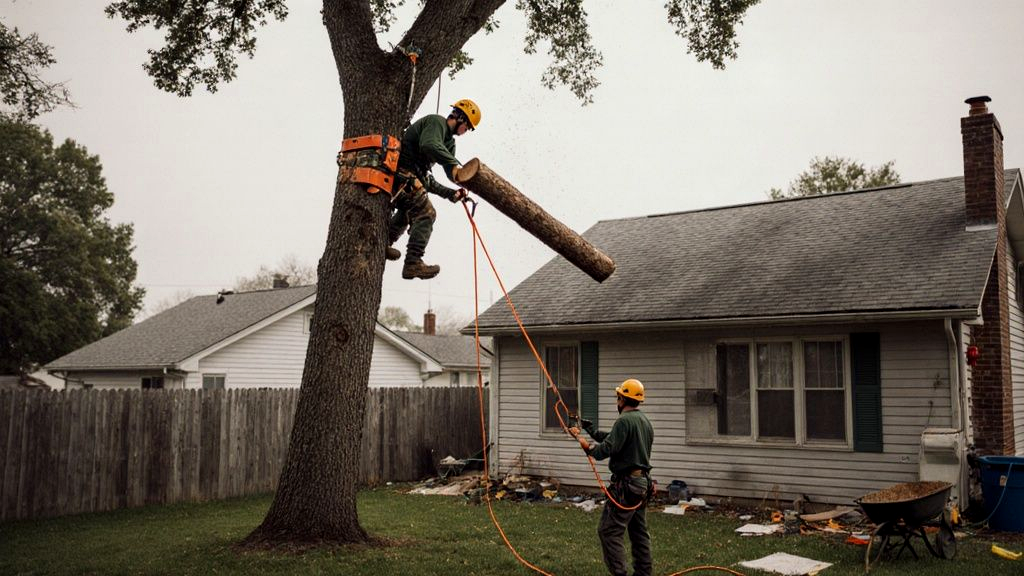
Most residential jobs use a three- to four-person crew, often including a climber, ground worker, chipper operator, and foreman or equipment operator. Experienced climbers with proper training or credentials usually cost more than entry-level labor, but that skill directly affects how safely the job is done. On tight removals, skilled rigging is what keeps heavy limbs from landing on your roof, driveway, fence, or neighbor’s property.
Equipment on the Job
Bucket trucks, chippers, stump grinders, loaders, ground mats, and crane rentals can all change the tree removal fee. A simple front-yard tree may only need saws, ropes, and a chipper, while a large oak over a house may require a bucket truck, crane, or advanced rigging. Those costs cover not just the equipment, but also transport, fuel, maintenance, and trained operators.
Insurance and Business Overhead
Insurance is one major reason tree removal estimates can vary so much. A properly insured crew builds liability and workers’ compensation costs into the price because tree work involves chainsaws, falling limbs, heavy logs, tight spaces, and real injury risk. Before work starts, ask for current insurance certificates because a cheap uninsured crew can become the most expensive mistake on the job.
Disposal and Cleanup
A mature hardwood can produce several truckloads of brush, logs, and chips. Hauling that material off-site takes fuel, labor, truck space, and disposal time.
Some crews lower the tree removal fee by leaving logs or chips on the property. That is fine if you actually want the material.
But if you expect a clean yard, ask whether the estimate includes:
- Brush chipping
- Log removal
- Raking and blow-off
- Hauling chips away
- Final cleanup around the work area
Cleanup is where vague estimates get ugly. Get it in writing.
Risk and Hazard Premium
The closer a tree is to a home, power line, fence, pool, or landscaping, the slower and more careful the work becomes. An open-yard tree may come down in large sections, while one near a roof often has to be tied, cut, lowered, and controlled piece by piece. That extra time is not overcharging; it is the cost of avoiding expensive damage.
Typical Tree Removal Fee Ranges by Size in 2026
Tree removal pricing varies by property, access, hazards, and local market conditions. Use the ranges below as a budgeting guide for Memphis and North Mississippi, not as a guaranteed quote.
| Tree Height | Common Examples | Base Removal Range | Add Stump Grinding |
|---|---|---|---|
| Under 25 ft | Bradford pear, dogwood, young magnolia | $250 to $500 | +$75 to $150 |
| 25 to 50 ft | Crepe myrtle, redbud, young oak | $500 to $1,000 | +$100 to $200 |
| 50 to 75 ft | Mature maple, sweetgum, pecan | $1,000 to $1,800 | +$150 to $300 |
| 75 ft or more | Mature oak, pine, sycamore | $1,800 to $3,500+ | +$200 to $400 |
| Hazardous or over structures | Near house, lines, pool, or fence | Custom quote | Quoted with job |
The tree removal fee rises fastest when the crew has to protect structures, control falling sections, bring in special equipment, or haul away large amounts of debris. For a property-specific estimate, review our tree removal services and request an on-site quote instead of relying on a broad price range.
Hidden Costs Most Homeowners Miss
Surprise charges almost never come from the base removal price. They come from the small line items a homeowner did not realize were optional or unbundled. Walk through this list with any crew before you sign anything.
- Stump grinding. Roughly nine times out of ten, this is priced separately. If you do not ask, you end up with a stump and a question of who owns the next call.
- Surface roots and feeder roots. Standard grinding only goes four to six inches below grade. Chasing surface roots across a lawn or down to a depth that supports replanting is a separate line.
- Hauling versus on-site chipping. Chipping brush on the spot is included in most quotes. Hauling the logs and chip pile off the property is often an extra charge, especially on hardwood-heavy jobs.
- Lawn and landscape protection. If a crew has to lay plywood mats across your turf to drive equipment in without crushing it, those mats and the labor to position them are real costs that get itemized.
- Permits and HOA paperwork. Most Memphis residential properties do not need a city permit, but heritage trees, riverside lots, and certain neighborhoods do. HOAs sometimes require their own approval form. Confirm who handles and pays for both.
- Travel and minimum job fees. Crews carry minimums to cover truck and crew time on small jobs, often in the $200 to $350 range. This is normal industry practice, but it surprises homeowners who assumed a small tree meant a small bill.
- After-hours and weekend premiums. Scheduling a removal for a Saturday or before a Monday morning event usually adds 10 to 20 percent on top of the weekday rate.
A crew that itemizes every one of these in writing is showing you how the math works. A crew that hands you a single round number with no breakdown is leaving themselves room to add charges after the fact. The first kind costs the same in the end and saves you the argument.
When Emergencies Multiply Your Tree Removal Fee
Storm season in the Mid-South sends pricing in one direction, and it is not down. A tree resting on a house at two in the morning is not the same job as a planned Thursday removal. Two-person crews become four. Daytime rates pick up after-hours premiums. Sometimes a bucket truck gets pulled off another scheduled job to handle the call, which costs the company hours of rescheduling work. All of that is real cost, and it lands in the final number.
If a tree is already on the structure, the priority is to stop the damage from spreading. We run emergency tree removal services across Memphis and North Mississippi with crews and rigging gear staged for after-hours response. A typical emergency call runs 20 to 40 percent above the planned-job rate for the same tree, with the exact premium depending on the time of day, the rigging plan, and how much of the property is already affected. Insurance often covers a meaningful share when a covered structure is damaged, but the response itself still has to happen on the crew’s clock.
How to Read a Quote and Compare Estimates
Compare two or three written estimates from established local crews. Not phone guesses. Not one-line text-message prices. Written estimates.
Look for these details:
- Current insurance certificates: Ask for liability and workers’ compensation documentation.
- Itemized scope: Removal, cleanup, stump grinding, hauling, access, and equipment should be clear.
- Crew and equipment plan: The estimate should explain how the work will be done.
- Cleanup terms: Know whether brush, chips, and logs are staying or leaving.
- Local reviews: Recent reviews from your area matter more than generic promises.
- Subcontracting: If special equipment is needed, ask whether it is in-house or subcontracted.
- Payment terms: Be cautious with large cash deposits, especially after storms.
If a quote mentions permits, city requirements, or right-of-way concerns, check the Memphis and Shelby County tree-removal notice or ask the contractor to explain what paperwork may apply to your property.
The best tree removal fee is not automatically the lowest number. It is the number that matches the risk, explains the scope, and protects your property.
Want a real tree removal fee on your tree this week?
Free, no-obligation written estimates across Memphis and North Mississippi.
Why the Cheapest Tree Removal Quote Can Be a Red Flag
Nobody wants to overpay. That is reasonable. But choosing the cheapest tree removal quote without understanding what is included is a bad move.
Tree removal is dangerous work, especially near homes, fences, vehicles, and power lines. A legitimate quote should account for trained crews, insurance, proper equipment, cleanup, and safe removal methods. If one quote is much lower than the others, you need to ask why.
A cheap quote may leave out important items such as:
- Stump grinding
- Debris hauling
- Full cleanup
- Insurance coverage
- Proper rigging
- Lawn protection
- Emergency response fees
- Specialized equipment
Worse, an uninsured or poorly equipped crew can create serious liability issues if someone is injured or property is damaged. Saving money up front is not worth it if the job is done carelessly.
When reviewing quotes, compare the full scope of work. Ask what is included, what is not included, how the crew will protect your property, and whether the company is properly insured.
If a tree is leaning, cracked, storm-damaged, or creating an immediate hazard, do not wait for the problem to get worse. We also offer emergency tree removal services for urgent situations where a tree may threaten your home, driveway, or safety.
Smart Ways to Budget Before You Book
A few practical choices can keep your tree removal fee under control.
- Bundle nearby trees: Most of the cost is getting the crew, truck, chipper, and equipment to your property. If you have two or three trees that need work, bundling them into one visit can lower the per-tree cost.
- Schedule before it becomes an emergency: A planned removal is usually easier to price than a storm-damage call. If a tree is dead, leaning, splitting, or dropping large limbs, do not wait until it lands on something.
- Decide on the stump up front: Adding stump grinding after the crew leaves can mean a second mobilization fee. If the stump has to go, include it in the original estimate.
- Keep the wood if you can use it: Leaving logs on site can reduce hauling costs. Only choose this if you have a real plan for the wood.
- Ask what could change the price: A good estimator should explain what could increase the tree removal fee before the job starts, such as hidden decay, limited access, extra hauling, utility clearance issues, or a change in cleanup scope.
Get a Written Tree Removal Fee Before You Guess
Online price ranges are useful, but they cannot see your yard. They cannot see the narrow gate, the soft lawn, the fence under the canopy, the dead top, the power line, the slope, or the cleanup you expect when the job is done.
If you are budgeting for removal, the next step is simple: get a written on-site estimate that separates removal, hauling, cleanup, and stump grinding. That gives you a real tree removal fee, not a guess.
Frequently Asked Questions
Why does the tree removal fee vary so much between crews?
The biggest spread is insurance, equipment, and crew experience. A licensed and insured outfit carries real overhead that an uninsured operator does not, and that gap is what shows up in the number. The middle quote from a legitimate, well-reviewed local crew is almost always the right one to trust.
Does homeowners insurance ever cover the bill?
If a tree falls on a covered structure such as a house, garage, or fence, most policies will cover removal as part of the claim, including hauling. If a tree falls without hitting anything insured, removal is usually paid out of pocket. Document conditions with photos and keep every itemized invoice for the adjuster.
Are deposits normal for tree removal?
Small deposits are common on larger jobs, typically 10 to 25 percent at scheduling, with the balance due at completion. Be cautious of any crew asking for a large up-front payment in cash, especially after a storm. That is one of the most reliable warning signs of a fly-by-night operator.
Should I always pay extra to grind the stump?
Only if you want to use that spot for something else: lawn, flower bed, patio, replanting. If the stump sits in an out-of-the-way corner and does not bother you, leaving it is fine and keeps a couple hundred dollars in your pocket. We give you both options at the estimate so the choice is yours.
How long is a written estimate good for?
Most of our written estimates are valid for 30 to 60 days. After that, fuel, disposal fees, and crew rates can move with the market. If a removal is on your radar, getting the number in writing now and scheduling within the next month is the safest way to lock in the price you were quoted.
Do you charge for the estimate itself?
No. Estimates are free and in-person. We walk the property with you, look at access, hazards, and cleanup scope, and leave you with a written number you can compare against any other quote. No pressure to book on the spot.
Get a written tree removal fee on your tree.
Twenty minutes on site, no pressure, real numbers. The fastest way to stop guessing about what a removal should actually cost is to have a licensed crew walk the property and put it in writing.