
Coffee Tree Care: Growing Arabica Plants Successfully
Good coffee tree care starts with knowing what you are actually growing. Coffea arabica is not just a novelty houseplant or a cute “coffee bean tree.” It is a tropical evergreen shrub that can grow into a small tree in the right climate, but in Memphis, it belongs indoors for most of the year. Cold weather, frost, and sudden temperature swings are too harsh for Arabica, so success starts with treating it like a warm-climate plant in a controlled indoor space.
The good news is that coffee plants can adapt well to home growing when their basic needs are met. Give your Arabica bright filtered light, steady moisture, warm temperatures, good drainage, and enough humidity, and it can reward you with glossy green leaves, fragrant white flowers, and possibly even red coffee cherries over time. This guide breaks down the practical steps that make coffee tree care easier, whether you are growing one plant on a sunny windowsill or learning how plant health principles apply to the larger trees around your property.
- Place Arabica in bright, indirect light. Morning sun is fine; harsh afternoon sun can scorch the leaves.
- Keep the soil evenly moist, but never let the pot sit in standing water.
- Aim for warm indoor temperatures, ideally above 60°F, and protect the plant from cold drafts.
- Raise humidity if the leaf tips turn brown, but do not blame every brown tip on dry air.
- Beans are possible indoors, but they are a bonus. Expect a small harvest after several years, not a daily coffee supply.
- Keep the plant away from pets, especially if it flowers and produces cherries.
Why Arabica Makes Such a Good Houseplant
The Reddit gardener who started us thinking about this post had just been handed a small Coffea arabica as a gift and had no idea what to do with it. That is the most common starting point we hear, and the good news is that Arabica is forgiving. In its native highlands it actually grows in the dappled shade of taller forest trees, not in blazing full sun. That understory habit is exactly why it adapts so well to the filtered light of a home: it is built to live underneath something bigger.
Indoors, Arabica gives you glossy deep-green leaves, a neat upright form, and, with enough maturity and patience, fragrant white flowers that can lead to red coffee cherries. Even without a bean harvest, it is a strong foliage plant with more character than the usual houseplant lineup. Treat it like the small tropical tree it is, and coffee tree care becomes a steady weekly routine instead of a guessing game.
Light, Water, and Humidity: The Heart of Coffee Tree Care
If you remember only one section of this guide, make it this one. Light, water, and humidity carry most of the load in coffee tree care
Light
Aim for bright, indirect light. An east-facing window is close to ideal, giving gentle morning sun without the harsh midday glare that scorches Arabica leaves. A spot a few feet back from a south or west window works too. If the leaves turn pale or develop brown, crispy edges, the plant is getting too much direct sun. If new growth is leggy and stretched, it wants more light.
Water
Arabica likes its soil kept evenly moist, similar to a wrung-out sponge. Water thoroughly when the top inch of soil feels dry, letting excess drain freely from the bottom. The fastest way to kill one of these plants is to let it sit in a saucer of standing water, which suffocates the roots and invites rot. In winter, when growth slows, ease off and let the surface dry a little more between waterings.
Humidity
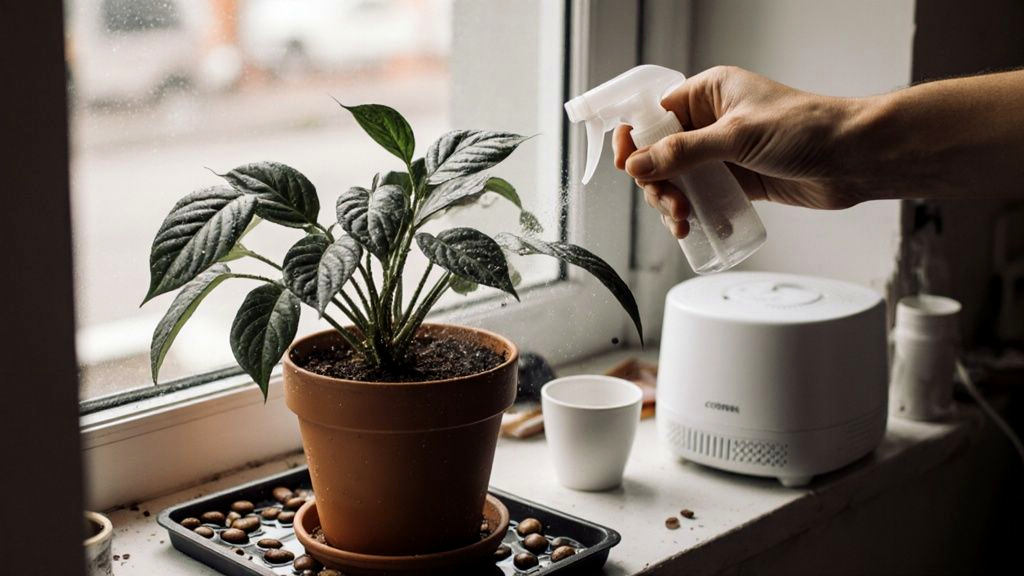
This is the one most new owners miss. Arabica evolved in misty highland forests where the air rarely drops below 50% humidity, and the dry air of a heated or air-conditioned home is its biggest enemy. Brown, papery leaf tips are almost always a humidity complaint. Grouping it with other plants, setting the pot on a tray of pebbles and water, or running a small humidifier nearby all help. A quick daily misting does not hurt, though a humidifier does far more lasting good.
Temperature and Memphis Growing Conditions
Coffee tree care in Memphis starts with this fact: Arabica is a tropical plant, not a Memphis landscape tree. It is not built for frost, freezes, or cold winter nights. Around Memphis/North Mississippi, grow it as an indoor plant and treat outdoor time as a warm-season privilege.
Keep the plant away from drafty doors, cold windows, and heating vents. A comfortable indoor range is usually fine, but try to keep it above 60°F. If temperatures drop into the mid-50s or lower, Arabica can drop leaves or stall.
This is where local context matters. You can move the pot to a covered porch in late spring and summer, but bring it back inside before cool nights arrive. Do not wait for the first frost warning. By then, the plant has already been stressed.
For full-size outdoor trees that actually belong in Memphis soil, Pyramid Tree Service handles trimming, removal, stump grinding, emergency tree service, and landscape support through our tree care services. Arabica is a houseplant here; oaks, maples, elms, and ornamental trees are the ones that need local outdoor tree management
Soil, Feeding, and Repotting
Arabica wants a rich, slightly acidic, well-draining mix. A standard peat-based potting soil with a couple of handfuls of perlite stirred in works beautifully. The acidity matters: a soil pH in the 6.0 to 6.5 range helps the roots take up nutrients, which is why an azalea or camellia mix can be a smart shortcut.
Feed lightly during the growing season, roughly spring through early fall, with a balanced liquid fertilizer diluted to half strength every three to four weeks. Skip feeding in winter. Like most things in coffee tree care, the failure mode is overdoing it: too much fertilizer scorches the roots and leaves a crusty salt buildup on the soil surface. When you see that, flush the pot with plenty of plain water.
Repot every two years or so, in spring, stepping up just one pot size at a time. A pot that is too large holds excess water around the roots and works against you. Fresh soil and a slightly roomier container are usually all a healthy Arabica asks for.
Pruning and Shaping Your Arabica
Here is where our day job overlaps with your windowsill. Pruning a coffee tree follows the same logic as pruning a shade tree in a Memphis backyard: you remove what is weak or crossing, and you shape for light and airflow. Pinch back the growing tips to encourage a bushier, fuller plant rather than a single leggy stem. Trim away any yellowing or dead leaves promptly so the plant spends its energy on healthy growth.
If your Arabica gets taller than you want, do not be afraid to cut it back hard in early spring. It responds well to a confident prune and will push out new branching below the cut. That instinct, knowing when to shape and when to remove, is the same judgment we bring to our professional tree trimming services on full-grown trees. The scale is wildly different, but the eye for structure is identical.
From Flower to Bean: What to Expect
With good coffee tree care, a mature indoor Arabica may flower after three to four years, though timing depends on light, plant health, and growing conditions. The small, white, fragrant flowers can develop into green cherries that slowly ripen to red.
One factual point matters here: Arabica is self-pollinating. You do not need a second plant or a house full of bees to get fruit. Indoors, gently shaking the flowering stems or brushing the flowers can improve fruit set, but hand pollination is help, not a requirement.
Inside each ripe cherry are usually two seeds: the coffee beans. A single houseplant may only produce a small handful, so keep your expectations sane. The reward is not replacing your grocery-store coffee. The reward is watching the full life cycle happen in your home.
For a reliable botanical reference, see the Missouri Botanical Garden profile for Coffea arabica. It describes the plant as a tropical evergreen shrub or small tree and gives useful care notes for light, soil, watering, and temperature.
Got a real tree that needs attention?
Free, no-obligation estimates across Memphis & North Mississippi.
Common Problems and Quick Fixes
Most Arabica trouble shows up in the leaves first. This quick reference covers the issues we hear about most often and the simplest fix for each.
| What you see | Likely cause | What to do |
|---|---|---|
| Brown, crispy leaf tips | Low humidity, watering swings, fertilizer salts, or hard water | Check watering consistency, flush the soil, and raise humidity |
| Yellowing lower leaves | Overwatering, poor drainage, or natural aging | Let the top inch dry before watering and confirm the pot drains |
| Pale or scorched patches | Too much direct sun | Move the plant back from the window or add filtered light |
| Long, stretched stems | Not enough light | Move to brighter indirect light and pinch tips |
| Sticky leaves or bumps on stems | Scale insects | Wipe leaves and stems; treat with insecticidal soap if needed |
| Fine webbing | Spider mites | Rinse foliage, isolate the plant, and improve humidity |
Do not treat every problem with fertilizer. That is a common beginner mistake. Weak growth is often a light or root issue, not a nutrient shortage.
Trees, Big or Small, Reward Consistency
A potted Arabica and a full-size Memphis shade tree are different plants, but both reward the same habit: watch the leaves, protect the roots, prune with purpose, and catch stress early. For your indoor Arabica, check the top inch of soil, look for brown tips or pale patches, and make sure the pot drains freely. For outdoor trees, look for dead limbs, cracked branches, storm damage, leaning trunks, fungus, or branches rubbing your roof, then schedule a professional inspection before a small issue becomes expensive.
Need help with the trees outside your home? Request a free estimate for tree trimming, removal, stump grinding, landscaping, or emergency tree work across Memphis and North Mississippi.
Frequently Asked Questions
Can I really grow a coffee tree indoors in a place like Memphis?
Absolutely. Arabica is not winter-hardy outdoors here, since it cannot take a frost, so it lives as an indoor plant year-round. A bright window, steady moisture, and decent humidity are all it needs. You can move it to a shaded porch in the warm months and bring it back inside before the first cold snap.
How often should I water my Arabica?
There is no fixed schedule. Check the top inch of soil with your finger and water thoroughly when it feels dry, then let the pot drain fully. That usually lands somewhere around once a week, but it depends on your light, pot size, and indoor humidity. When in doubt, slightly under-water rather than over-water.
Why are the leaf tips turning brown?
Brown, papery tips are almost always low humidity. Heated and air-conditioned rooms dry the air far below what Arabica likes. Set the pot on a tray of pebbles and water, group it with other plants, or run a small humidifier nearby. The new growth that follows should come in clean and green.
How long until my coffee plant produces beans?
Plan on three to four years before the first flowers, and a few more months after that for the cherries to ripen from green to red. Indoors you will need to hand-pollinate the blooms with a soft brush. A single houseplant yields only a small handful of beans, so think of the harvest as a fun bonus rather than your coffee supply.
Is the coffee plant safe around pets?
No. The leaves and especially the cherries contain caffeine and related compounds that are toxic to cats and dogs if eaten. Keep the plant up out of reach, and clean up any dropped berries promptly. If a pet does nibble it, call your veterinarian.
Trees, Big or Small, Are What We Do
Your potted Arabica and the oak in your front yard run on the same rules. When the full-size trees on your property need expert hands, our crew is a phone call away. Free estimates across Memphis and North Mississippi, fully licensed and insured.