
Orange Tree Care: Proven, Expert Tips for Healthy Trees
Orange tree care comes down to five habits: give the tree 8 or more hours of direct sun, plant it in fast-draining soil, water deeply only when the top two inches dry out, feed a citrus fertilizer through the growing season, and protect it from frost. In Memphis, that last habit means growing in a pot and moving it indoors before nights drop below about 40 degrees.
Get those right and a backyard orange rewards you with fragrant spring blossoms and sweet fruit. Get them wrong and it struggles. One Memphis homeowner moved a healthy potted orange tree outdoors too early and watched the leaves yellow and drop after a cold snap. Oranges need more attention than many other citrus trees, especially in the Mid-South, so the sections below walk through each step.
- Oranges want 8 or more hours of direct sun, warm days, and real protection once a hard frost threatens.
- Deep, infrequent watering plus a nitrogen-rich citrus fertilizer drives healthy growth and better fruit.
- Yellow leaves almost always point to a watering or feeding issue, not a dying tree.
- In the Mid-South, grow in a large container you can wheel indoors before the first freeze.
- Harvest by taste rather than color, and repot every two to three years into one size larger.
What a Healthy Orange Tree Actually Needs
An orange tree is a warm-climate citrus that fruits best when it gets long, hot, sunny days and never sees a hard freeze. Sweet oranges are rated for roughly USDA zones 9 through 11, which is why Florida, Texas, and California grow them in the ground and the rest of us grow them in pots. The good news is that the tree itself is forgiving once you match those few core conditions.
Most nursery orange trees are grafted, meaning a fruiting variety like Washington navel or Valencia is grown on a tougher rootstock. That graft is why your tree fruits quickly and stays a manageable size, and it is also why you will pull off the odd sucker later on. Oranges are self-pollinating, so a single tree will set fruit on its own. Most nursery orange trees flower in spring, but harvest timing depends on the variety. Some oranges ripen in winter, while others can hold fruit later into the season.
Sunlight, Climate, and the Right Spot for Orange Tree Care
Sun is the single biggest lever you control. An orange tree wants a minimum of 8 hours of direct light per day, and more is always better for fruit set and sugar. Outdoors in the warm months, that means the brightest, most sheltered spot you have, ideally against a south-facing wall that soaks up heat during the day and releases it at night.
Temperature is where most people in our region lose their tree. Memphis sits in zone 7b to 8a, several full zones colder than an orange can handle in the ground, so you can check exactly where you fall on the USDA Plant Hardiness Zone Map before you plant anything. The practical rule for the Mid-South: grow your orange in a pot, and once nights start dropping below about 40 degrees, plan to move it into a garage, sunroom, or bright indoor corner. A single unprotected hard freeze can defoliate or kill a tree that was thriving a week earlier.
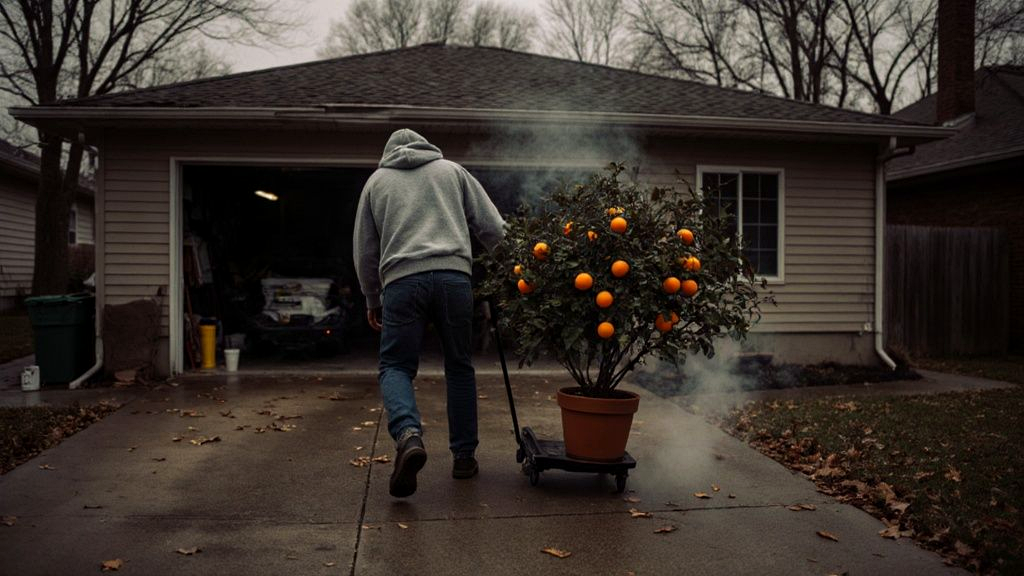
If you grow in a container you can move, put it on a heavy-duty rolling caddy from the start. Shifting 60 or 70 pounds of soil and tree indoors ahead of a cold snap becomes a two-minute job instead of a weekend of sore backs. Once the tree is inside, keep it away from heat vents and cold drafts alike, since both dry it out fast and trigger the leaf drop that scares new growers.
Make every move gradual. A tree that spent the winter behind glass will scorch if it goes straight into full summer sun, so in spring, wait until the frost risk has passed and nights stay mild, set it in bright shade for about a week, then shift it into more direct light over the following week. Reverse the process in fall by bringing it in overnight for several nights before it moves inside for the season. A slow transition cuts down on the leaf drop that often follows a sudden change in light and temperature.
Choosing, Potting, and Repotting an Orange Tree
Start with a grafted tree on a dwarfing or semi-dwarf rootstock. Navel types such as Washington navel are seedless and easy to peel, while Valencia is a juicing orange that ripens later and holds well on the tree. Whichever you choose, oranges need more sustained summer heat than lemons to develop full sweetness, and they are less content as year-round houseplants. Plan for your tree to spend the warm months outside.
For the first pot, go only a few inches wider than the nursery container, and make sure it has several drainage holes. A pot that is far too big holds a mass of wet soil the roots cannot reach yet, which is a common path to root rot. Set the tree at the same depth it grew in the nursery, with the top of the root flare just visible and the graft union well above the soil line. Never pile soil or mulch against the trunk.
Plan to repot every two to three years, or sooner if roots circle the bottom of the pot or water runs straight through without soaking in. Move up one pot size, loosen the circling roots, and replace the tired mix with fresh fast-draining soil. Late winter to early spring, just before new growth starts, is the easiest time on the tree.
Watering, Feeding, and Soil
The foundation of orange tree care is soil that drains. Citrus roots hate sitting wet, so use a fast-draining potting mix made for cactus or citrus, or cut a standard mix with extra perlite and pine bark. A pot with real drainage holes lets the root zone breathe and dry between waterings, which is exactly the rhythm these trees evolved for.
Water deeply but not constantly. Push a finger two inches into the soil: if it comes out dry, water until it runs from the bottom, then leave the tree alone until the top couple of inches dry again. The classic mistake is frequent shallow sips that keep the roots soggy and starved of oxygen. Aim the water at the soil rather than the leaves, since dry foliage is less prone to fungal spots, especially indoors.
During the growing season, feed every few weeks with a fertilizer formulated for citrus, which carries the higher nitrogen and the micronutrients such as magnesium, iron, and zinc that oranges burn through as heavy feeders. Yellowing between the veins on older leaves often points to magnesium deficiency, while yellowing on newer growth can suggest iron deficiency or pH-related nutrient uptake issues. A citrus-specific feed can help correct nutrient gaps when watering, drainage, and light are already in good shape.
A simple routine is a slow-release citrus granule in spring, topped up with a liquid citrus feed through summer. Stick to the label rate, because extra fertilizer in a pot can burn roots, and stop feeding in late fall so the tree can rest through winter.
Container trees dry out faster than anything in the ground, especially on a hot July patio, so check the soil more often in summer and ease off in winter when growth slows. Consistency matters more than volume. A tree that swings between bone-dry and waterlogged will drop leaves and fruit, while one on a steady deep-then-dry cycle stays glossy.
Pruning and Shaping Your Orange Tree
Oranges do not need aggressive pruning, but a little goes a long way. In late winter, before the spring flush, remove anything dead, damaged, crossing, or growing straight back into the center of the canopy. Opening up the middle lets light and air reach the interior, which means more evenly ripened fruit and far fewer pest and fungal problems.
Always pull off the suckers that sprout below the graft union, the swollen knuckle low on the trunk. That growth comes from the rootstock and will never give you good oranges, so it only steals energy from the fruiting variety above. Keep your cuts small, favor a balanced open shape over one tall leader, and step back often to check the tree from a few feet away.
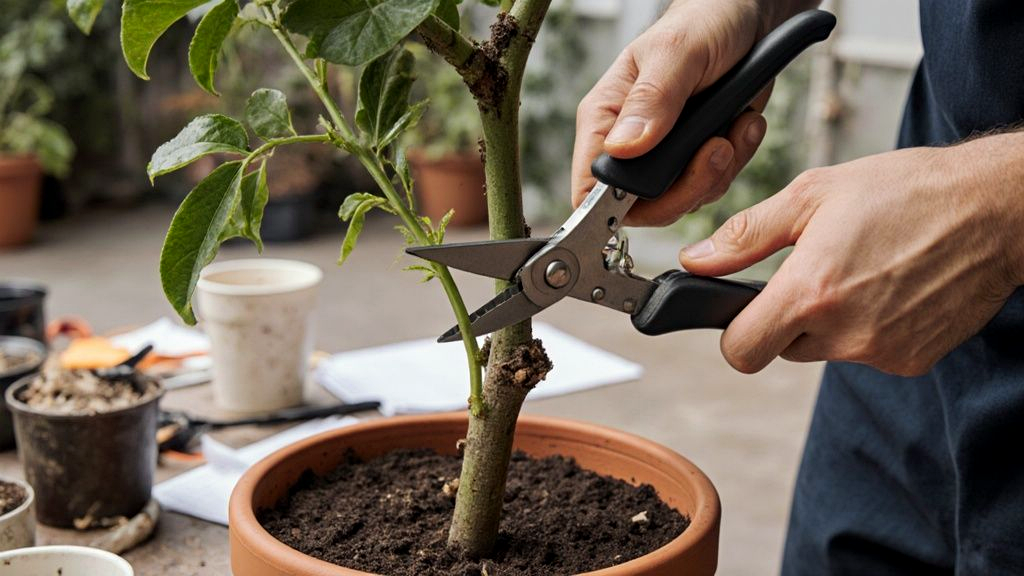
Light pruning on a small potted orange tree is manageable from the ground. The risk changes completely with mature landscape trees, storm-damaged limbs, or heavy branches near a roof, where poor cuts can create decay, weaken the structure, or create safety problems. When a mature tree gets too big or too risky to shape safely from the ground, that is the moment to bring in professional tree trimming services rather than balancing on a ladder with a running saw. The right cuts on a big tree either help it for decades or invite decay for the same length of time, so precision counts.
Got a citrus or shade tree that has outgrown the yard?
Free, no-obligation estimates across Memphis and North Mississippi.
When and How to Harvest Oranges
Oranges ripen slowly, many months after the spring bloom, and the exact window depends on the variety. Color alone is not a reliable signal: a fruit can turn fully orange before its sugars develop, and Valencias can regreen near the stem while staying ripe. Taste is the real test. Pick one fruit that looks ready, and if it is sweet, the others at the same stage are likely ready too.
Oranges do not keep sweetening after they are picked, so there is nothing to gain from harvesting early. Ripe fruit holds on the tree for a while, which lets you pick as you need it. Clip the stem with hand pruners rather than pulling, since a hard tug can tear the peel and damage the branch. If the tree is still carrying fruit when it is time to move indoors, bring it in with the fruit on; it can finish ripening inside in a bright spot.
Common Orange Tree Problems and How to Fix Them
Most orange tree trouble traces back to a handful of causes, and nearly all of it is reversible if you catch it early. Use this quick reference to match the symptom to the likely fix before you assume the worst.
| Symptom | Most likely cause | What to do |
|---|---|---|
| Yellowing leaves | Overwatering or a nutrient shortfall | Let the soil dry between waterings and feed a citrus fertilizer with magnesium, iron, and zinc. |
| Sudden leaf drop | Cold draft, heat vent, or a big move indoors | Stabilize the light and temperature; fresh leaves usually return once conditions settle. |
| Fruit drops while small | Uneven watering or normal self-thinning | Water on a steady deep-then-dry cycle; some early fruit drop is natural and healthy. |
| Sticky leaves or black film | Scale, aphids, or the sooty mold that follows them | Rinse the foliage and treat with horticultural oil or insecticidal soap. |
| Fine speckling or webbing on leaves | Spider mites, often indoors in dry, heated air | Rinse the leaf undersides, move the tree away from vents, and treat with horticultural oil or insecticidal soap. |
| Silvery, winding trails in new leaves | Citrus leafminer larvae | Damage is mostly cosmetic on an established tree; let the leaves harden off and keep the tree healthy rather than spraying heavily. |
| Oozing sap or dark bark at the trunk base, wilting in wet soil | Root or collar rot from soil that stays soggy | Pull soil and mulch away from the trunk, cut back watering, and repot into fresh fast-draining mix. |
| Flowers but no fruit | Too little light or poor indoor pollination | Boost sunlight and hand-pollinate open blooms with a small soft brush. |
The trees are tougher than they look. In many cases, a struggling container orange tree improves once watering, light, nutrition, and temperature are corrected. Check the undersides of the leaves and the newest growth each time you water, since that is where most pests show up first. Do not rush the tree to the compost pile until you have checked the basics.
When Your Orange Tree Needs a Professional
A potted orange is a do-it-yourself project, and most orange tree care stays firmly in that territory: sun, water, feed, protect from frost, prune lightly. The picture changes once a citrus or any other tree goes in the ground and matures into a serious size. A tall tree with structural cracks, a heavy limb leaning over the roof, or a dense canopy that needs thinning is not a ladder-and-loppers afternoon.
That is where our team comes in. If you are weighing storm damage, a removal, or simply want a mature tree shaped correctly and safely, our comprehensive tree care services cover assessment, trimming, removal, and stump grinding throughout the Memphis metro. We have certified arborists on staff and more than 20 years of experience in Memphis, and the on-site estimate is free. And if the citrus bug has you hooked, the same container-and-frost logic carries straight over to our Meyer lemon growing guide, a close cousin that many Mid-South growers add right alongside their orange.
Frequently Asked Questions
How long until an orange tree produces fruit?
A grafted orange tree from a nursery usually sets its first fruit within three to four years, and sometimes sooner if it arrives already blooming. Trees grown from seed take far longer, often six years or more, and may not match the parent variety. For dependable fruit, always start with a grafted tree.
How many years will an orange tree keep producing fruit?
A healthy orange tree planted in the ground in a warm climate can keep producing for decades. A container tree has a more limited life because its roots are confined, but regular repotting, fresh soil, and steady feeding keep it fruiting for many years.
What fertilizer should I use for an orange tree?
Use a fertilizer labeled for citrus. It carries more nitrogen than a general-purpose feed, plus the magnesium, iron, and zinc that oranges use heavily. For a potted tree, a slow-release citrus granule in spring and a liquid citrus feed through summer is an easy routine. Follow the label rate and stop feeding in late fall.
Why are my orange tree leaves turning yellow?
Yellow leaves usually mean one of two things: the roots are staying too wet, or the tree is short on nutrients like nitrogen, magnesium, or iron. Check watering first by letting the top couple of inches of soil dry out, then feed a citrus-specific fertilizer. Yellowing between green veins on older leaves is a classic magnesium or iron signal, and it is one of the most common questions in orange tree care.
Are coffee grounds good for orange trees?
In small amounts, composted first, they do no harm, but they are not a substitute for citrus fertilizer. Spread fresh on top of a pot, grounds can form a dense layer that holds moisture and slows drainage, which is the opposite of what citrus roots want. Compost them, and rely on a citrus feed for the tree’s actual nutrition.
Does baking soda help orange trees?
Baking soda sprays are a home remedy for some fungal leaf problems on other plants, but they do not fix the common orange tree issues in the table above, and the sodium can build up in container soil where it harms roots. For scale, aphids, and mites, horticultural oil or insecticidal soap is the more dependable choice.
Can an orange tree survive winter outdoors in Memphis?
Not reliably. Memphis winters drop well below what sweet oranges can take, so the safe play is to grow yours in a pot and move it into a garage or bright indoor space once nights fall below about 40 degrees. A single hard freeze can defoliate or kill an unprotected tree, so never gamble on a mild forecast in the Mid-South.
How big does a container orange tree get?
In a pot, a grafted orange usually tops out around 5 to 8 feet, which is part of why container growing is so popular outside citrus country. Planted in the ground in a warm enough climate, a standard sweet orange can reach 20 feet or more. Pot size, pruning, and sunlight all influence the final height, so you have real control.
Do I need two orange trees to get fruit?
No. Orange trees are self-pollinating, so a single tree will fruit on its own. Outdoors, bees and wind handle pollination for you. Indoors, where pollinators are absent, gently brushing the center of each open flower with a soft brush every couple of days noticeably improves how much fruit sets.
Trees too big for the backyard? We have got it.
From a leaning oak to a storm-damaged limb over the roof, our licensed and insured crew handles trimming, removal, and stump grinding across Memphis and North Mississippi. Free estimates, honest pricing, full cleanup.