
Lemon Meyer Tree Care Made Simple for Home Growers
A Meyer lemon tree is one of the most rewarding plants you can grow, and good lemon meyer tree care is what separates a glossy, fruit-heavy little tree from a leggy one quietly dropping leaves on the patio. These compact citrus trees thrive in pots, reward you with fragrant blooms and sweet-tart fruit, and forgive a surprising number of mistakes once you understand what they actually want. We get asked about them all the time around Memphis, so here is everything our crew has learned.
- Meyer lemons are hardier and sweeter than grocery-store lemons, and happiest in a container you can move.
- They want 8 or more hours of direct sun, fast-draining soil, and protection once nights drop below about 50 degrees.
- Yellow leaves almost always point to watering or feeding, not a dying tree.
- Light, regular pruning keeps the tree open, productive, and easy to harvest.
What Makes a Meyer Lemon Worth Growing
The Meyer lemon is not actually a true lemon. It is a cross between a lemon and a mandarin or sweet orange, which is why the fruit is rounder, the skin is thinner and more golden, and the juice is noticeably sweeter and less harsh than what you buy at the store. That parentage also makes the tree more cold-tolerant and more compact than a standard lemon, which is exactly why it has become a favorite for home growers and a constant topic in gardening forums.
In a container, a Meyer lemon usually tops out around 4 to 6 feet, small enough to live on a porch in summer and come indoors for winter. The trees are self-pollinating, so you only need one to get fruit, and a healthy specimen will flower and set lemons on and off throughout the year rather than in one short burst. Those fragrant white blooms alone are reason enough to keep one by a sunny door.
Light, Temperature, and the Right Spot
Sun is the single biggest lever you control. A Meyer lemon wants a minimum of 8 hours of direct light a day, and more is better. Outdoors in the warm months, that means the brightest, most sheltered corner of the yard. Indoors over winter, it means your sunniest south-facing or west-facing window, and most homes still come up short, so a simple grow light makes a real difference in fruit set.
Temperature is where most people lose their tree. Citrus is rated for roughly USDA zones 8 through 11, and Memphis sits right on the edge in zone 7b to 8a. You can check your exact zone on the USDA Plant Hardiness Zone Map. The practical rule: once nights start dipping below 50 degrees, start planning to bring the pot inside, and never let it sit through a hard frost. A surprise freeze is the most common way a healthy Meyer lemon goes from thriving to bare in a single week.
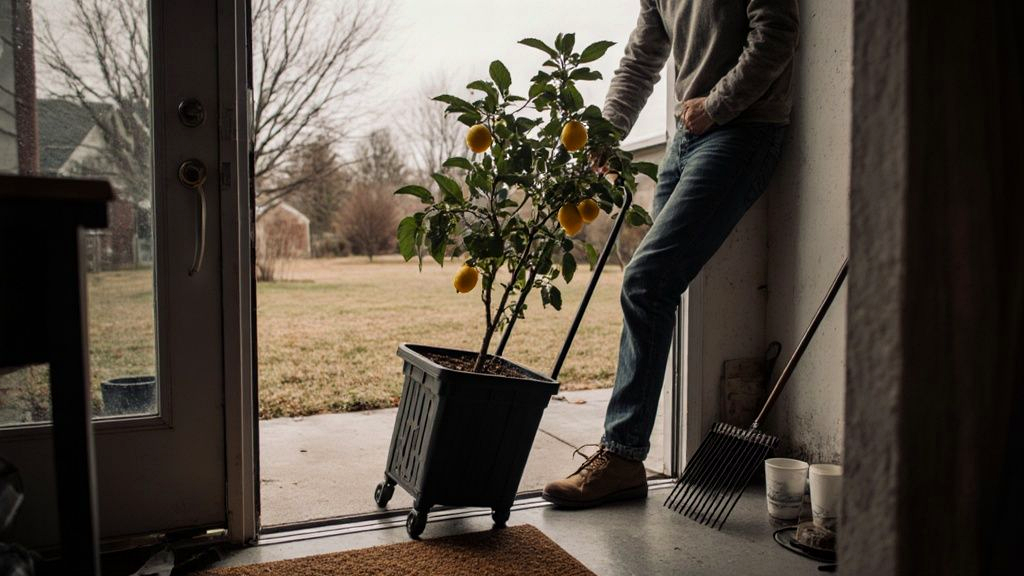
If you grow in a pot you can wheel, do exactly that: put it on a rolling caddy so moving 50 pounds of soil and tree indoors before the first frost is a two-minute job instead of a weekend chore. When the tree comes inside, keep it away from heat vents and cold drafts, both of which dry it out and trigger leaf drop.
Watering, Feeding, and Soil for Lemon Meyer Tree Care
Good soil is the foundation of lemon meyer tree care. Citrus hates wet feet, so use a fast-draining potting mix made for cactus or citrus, or cut a standard mix with extra perlite and pine bark. A terracotta pot with real drainage holes helps the root zone breathe and dry out between waterings, which is what these trees are built for.
Water deeply but not constantly. Stick a finger two inches into the soil: if it is dry at the tip, water until it runs out the bottom, then leave it alone until the top couple of inches dry again. The classic mistake is frequent shallow sips that keep the roots soggy and starved of oxygen. During the growing season, feed every few weeks with a fertilizer formulated for citrus, which carries the higher nitrogen and the micronutrients like magnesium and iron that these heavy feeders burn through. If older leaves yellow between green veins, that is usually a magnesium or iron signal, not a watering problem, and a citrus-specific feed or a little Epsom salt corrects it.
Pruning and Shaping Your Meyer Lemon
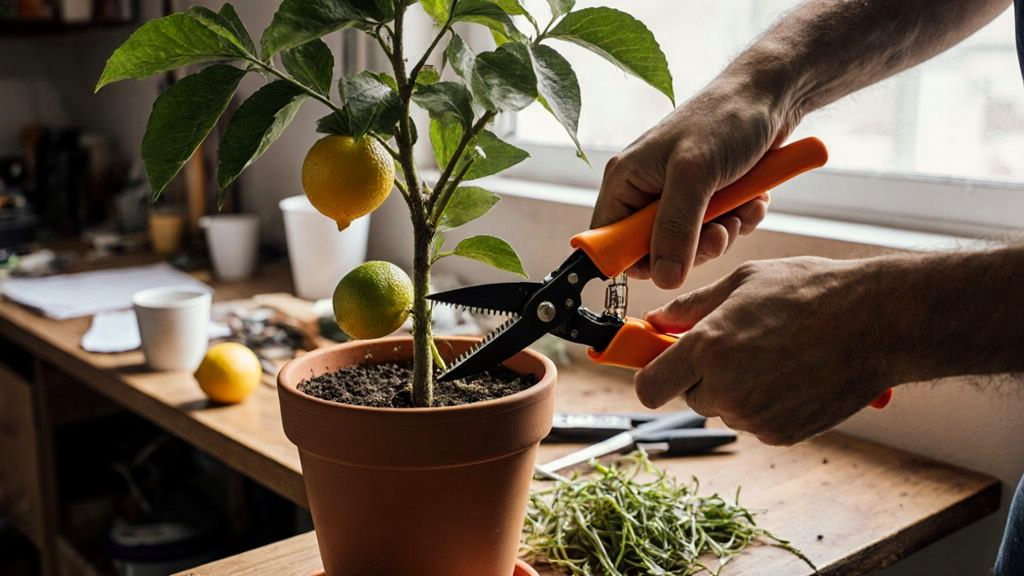
Meyer lemons do not need aggressive pruning, but a little goes a long way. In late winter, before the spring flush, remove anything dead, crossing, or growing back into the center of the canopy. Opening up the middle lets light and air reach the interior, which means more fruit and fewer pest problems. Always pull off the suckers that sprout below the graft union, the swollen knuckle low on the trunk, because that growth comes from the rootstock and will never give you good Meyer lemons.
Keep the cuts small and the tree balanced rather than chasing one tall leader. The same principles scale up to the big citrus and shade trees in your yard, and when a tree gets too large or too risky to handle from the ground, that is the moment to bring in professional tree trimming services rather than working off a wobbly ladder with a chainsaw.
Common Problems and How to Fix Them
Most Meyer lemon trouble traces back to a handful of causes, and almost all of it is reversible if you catch it early. Use this quick reference to match the symptom to the likely fix before you assume the worst.
| Symptom | Most likely cause | What to do |
|---|---|---|
| Yellowing leaves | Overwatering or a nutrient shortfall | Let the soil dry between waterings and feed a citrus fertilizer with magnesium and iron. |
| Sudden leaf drop | Cold draft, heat vent, or a big move | Stabilize the spot and light; new leaves usually return once conditions settle. |
| Flowers but no fruit | Too little light or poor pollination indoors | Add a grow light and hand-pollinate blooms with a small brush. |
| Sticky leaves or webbing | Scale, aphids, or spider mites | Rinse the foliage and treat with horticultural oil or insecticidal soap. |
| Curling, cupped leaves | Heat stress or the soil drying out too far | Move out of harsh afternoon sun and water more deeply, less often. |
Got a citrus or shade tree that has outgrown the pot?
Free, no-obligation estimates across Memphis and North Mississippi.
When Your Citrus Needs a Professional
A potted Meyer lemon is a do-it-yourself project, and most lemon meyer tree care stays firmly in that territory. The picture changes once a citrus or any other tree goes in the ground and matures. A 25-foot tree with structural cracks, a heavy limb leaning over the roof, or a canopy that needs thinning is not a ladder-and-loppers job, and pruning cuts at that scale either help the tree for decades or invite decay for the same length of time.
That is where our team comes in. If you are weighing storm damage, a removal, or simply want a mature tree shaped correctly, our comprehensive tree care services cover assessment, trimming, removal, and stump grinding throughout the Memphis metro. And if you have caught the citrus bug, the same care principles carry over to other potted specialty trees, like our guides to birds of paradise care and growing your own coffee plant.
Frequently Asked Questions
How long until a Meyer lemon tree produces fruit?
A grafted Meyer lemon bought from a nursery often sets its first fruit within two to three years, and sometimes the very first season if it arrives already flowering. Trees grown from seed take far longer, frequently five years or more, and may never match the parent. For reliable fruit, start with a grafted tree.
Why are my Meyer lemon leaves turning yellow?
Yellow leaves usually mean one of two things: the roots are staying too wet, or the tree is short on nutrients like nitrogen, magnesium, or iron. Check your watering first by letting the top couple of inches of soil dry out, then feed a citrus-specific fertilizer. If the yellowing shows up between green veins on older leaves, that is a classic magnesium or iron signal.
Can a Meyer lemon tree survive winter outdoors in Memphis?
Not reliably. Memphis winters dip well below what citrus can take, so the safe play is to grow yours in a pot and move it indoors or into a garage with light once nights fall below 50 degrees. A single hard freeze can defoliate or kill an unprotected tree, so do not gamble on a mild forecast.
How big does a Meyer lemon tree get?
In a container, expect a manageable 4 to 6 feet, which is part of why these trees are so popular for patios and porches. Planted in the ground in a warm enough climate, they can reach roughly 10 feet. Pot size, pruning, and sunlight all influence the final height, so you have a fair amount of control.
Do I need two trees to get lemons?
No. Meyer lemons are self-pollinating, so a single tree will fruit on its own. Outdoors, bees and wind handle pollination for you. Indoors, where pollinators are absent, gently brushing the center of each open flower with a soft brush every couple of days noticeably improves how many lemons set.
Trees too big for the patio? We have got it.
From a leaning oak to a storm-damaged limb over the roof, our licensed and insured crew handles trimming, removal, and stump grinding across Memphis and North Mississippi. Free estimates, honest pricing, full cleanup.