
Tree Stump Removal How To: A Complete Expert Guide on Smart DIY vs Professional Methods
There are four ways to remove a tree stump: grind it below ground with a stump grinder, dig it out and cut the roots, speed up rot with drilled holes and a nitrogen source, or leave it to decay on its own. Grinding clears the spot in one visit. Digging is realistic only for small stumps. Rot-based methods take months to years.
Which one fits your yard depends on the stump’s size, the tree species, how far the roots spread, what sits near it, and how soon you need the space. A small softwood stump in an open area can be a weekend DIY project. A large hardwood stump near a driveway, fence, utility line, or patio is usually a job for a crew with commercial equipment. This guide walks through each DIY and professional method step by step, so you can decide whether to handle it yourself or call Pyramid Tree Service.
- DIY stump removal works for small, accessible stumps when you have months to wait.
- Chemical removal is cheap but slow, often taking 6 to 12 months to fully break a stump down.
- Renting a stump grinder is the fastest DIY option, but the machine is heavier and more dangerous than most homeowners expect.
- Professional grinding is usually finished in 30 to 90 minutes and runs $75 to $400 for a typical residential stump.
- Stumps within 10 feet of structures, utilities, or hardscape almost always belong with a pro.
- Burning a stump or pulling it out with a truck and chain usually causes more damage than it solves.
Tree Stump Removal How To: What to Check Before Choosing a Method
Before you pick a method, take a few minutes to inspect the stump and the area around it. The right approach depends on more than just wanting the stump gone. Size, location, safety risks, and your plans for the space all affect whether DIY removal makes sense or professional stump grinding is the better option.
Check the Stump Size
Start by measuring the stump across the widest point at ground level, including the flared base where the roots spread out, since that flare has to come out too. Small stumps under 8 inches wide are usually more realistic for DIY removal, especially if the roots are shallow and the soil is easy to dig.
Medium and large stumps are harder to remove, especially if they come from hardwood trees like oak, hickory, pecan, or sweetgum. These trees often have dense wood and wide root systems, which can make digging, cutting, or grinding much more difficult. Softer woods such as pine rot and grind more easily.
Look at What Is Around the Stump
Next, check the area around the stump. If it is close to a home, fence, driveway, patio, sprinkler system, or buried utility line, the risk increases.
Before digging, cutting roots, or grinding near the ground, contact 811 so underground utility lines can be marked. This is not a step to skip. Hitting a buried line can turn a simple stump removal project into an expensive and dangerous problem.
Decide What You Want to Do With the Space
Finally, think about your end goal. If you only want the stump to break down over time, a slow DIY method like natural decay or chemical removal may be enough.
If you want to plant grass, install landscaping, build a patio, or fully reclaim the area, professional stump grinding is usually the cleaner and faster answer. It leaves the space easier to level, fill, and prepare for whatever comes next.
Why Tree Stumps Should Not Be Ignored
A leftover stump is not just a cosmetic problem. It can create practical issues around the property.
Old stumps can attract termites, ants, beetles, and other pests. On species that resprout, the stump can also send up new shoots, and the living roots can keep growing toward sidewalks, driveways, and foundations. Over time, the stump may rot unevenly, leaving soft spots or holes in the soil.
Stumps also get in the way of mowing, landscaping, and outdoor projects, and they are easy to trip over. In front yards and high-traffic areas, they can make the property look neglected. The goal is not just to remove wood. The goal is to make the yard safer, cleaner, and easier to use.
When Leaving a Stump in Place Is Reasonable
Not every stump has to go. A stump at the back of a wooded lot, well away from the house and out of the mowing path, can be left to rot on its own and will give birds and insects food and shelter while it does. Some homeowners turn one into a planter or a seat. Keep an eye on it as it softens, and remove it once it starts to attract termites near the house or becomes a hazard for people walking by.
DIY Tree Stump Removal Methods
DIY methods can work when the stump is small, the area is open, and you are not in a hurry. These options are usually cheaper upfront, but they require patience, physical effort, or equipment rental.
DIY Method 1: Let the Stump Rot Naturally
Natural decay is the simplest DIY stump removal method because you leave the stump in place and let moisture, fungi, insects, and time break it down. The downside is speed. An untreated hardwood stump can stay visible for years while still getting in the way of mowing or landscaping.
You can shorten the wait:
- Cut the stump as close to the ground as you safely can, keeping the chainsaw out of the dirt.
- Drill deep holes across the top of the stump and angled into the sides. More holes expose more wood to moisture and fungi.
- Fill the holes with a high-nitrogen fertilizer or compost, then water them in.
- Cover the stump with soil, mulch, or a tarp to hold moisture, and rewet it during dry spells.
- Check it every few months. Once the wood turns soft and spongy, break it apart with an axe or mattock and dig out the pieces.
This method works best for small stumps in low-visibility areas where speed does not matter.
DIY Method 2: Use a Chemical Stump Remover
Chemical stump removers help speed up decay by softening the wood after you drill holes, apply the product, add water, and wait. This method is affordable and does not require heavy equipment, making it useful for homeowners who want a lower-effort option. However, it is not instant, and you still need to follow the product label carefully, especially near children, pets, gardens, or plants you want to protect.
Stump remover and stump killer are not the same product. Stump remover feeds the decay process. Stump killer is an herbicide that stops a freshly cut stump from sending up sprouts. It only does its job when you brush it onto the fresh cut right away, concentrating on the ring of living wood just inside the bark. Pouring herbicide into an old stump does nothing to speed decay and can soak into the soil around plants you want to keep.
Chemical removal suits homeowners who want gradual results and are not trying to use the space immediately.
DIY Method 3: Dig Out the Stump by Hand
Manual stump removal means digging around the stump, exposing the roots, cutting them with an axe, saw, or loppers, and pulling the stump out. This can work for small trees or shrubs with shallow roots, especially if you want to remove more of the root system without renting equipment. The problem is that larger stumps become difficult fast because roots can spread wide, soil can be hard to dig, and hardwood stumps stay extremely heavy even after the roots are cut.
If the stump is small enough to dig, technique matters more than muscle:
- If the tree is still standing, cut it off a few feet above the ground instead of flush. The leftover trunk gives you leverage later.
- Call 811 and wait for the lines to be marked.
- Start your trench out away from the trunk, where the roots are thinner and easier to cut, then work inward.
- Cut each root as you expose it with loppers, a pruning saw, or an axe. A long digging bar helps reach roots under the stump.
- Rock the stump back and forth. Whatever is still holding it is a root you have not cut yet.
- Lift the stump out, backfill with topsoil, and tamp it down as you go.
Use your tools to cut roots, not to pry. Shovel handles break quickly when used as levers. Skip the truck and chain, too. Chains and ropes can snap under load and whip across the yard, and pulling a stump out usually tears up the lawn and can damage the vehicle.
Our honest opinion: this method is only worth it for small stumps. If you are attacking a large hardwood stump with a shovel and axe, the plan is probably trash. You will spend a weekend beating up your body when a grinder could handle the job far more efficiently.
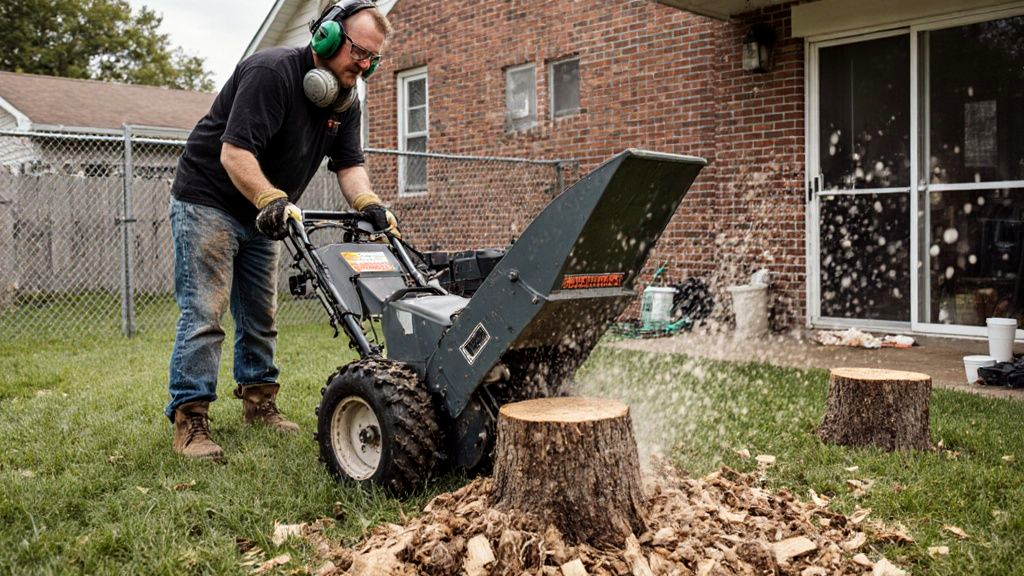
DIY Method 4: Rent a Stump Grinder
Renting a stump grinder is the most aggressive DIY option because the machine uses a rotating cutting wheel to grind the stump below the surface. It can work well when the stump is in an open, level area and you are comfortable handling heavy equipment. However, rental grinders are loud, heavy, and risky to use, especially around rocks, buried metal, roots, slopes, fences, or nearby structures.
If you rent one, clear rocks and debris from around the stump first, wear eye and hearing protection, keep people and pets well back from the flying chips, and take the stump down in shallow side-to-side passes instead of forcing the wheel in.
Renting is only a good DIY choice for confident homeowners with simple site conditions. If the stump is close to anything expensive, hire a professional.
DIY Method 5: Burning the Stump
Burning is sometimes listed as a DIY stump removal method, but it is usually a bad choice for residential properties. Even if the stump looks isolated, nearby roots, mulch, dry leaves, fences, sheds, and landscaping can create serious fire-spread risks, while smoke can bother neighbors. For Memphis and Shelby County homeowners, stump burning should not be treated as a normal DIY option because it may violate local rules and is rarely worth the risk.
Pouring fuel on the stump makes it worse. The fuel soaks into the soil, and a burning stump can keep smoldering down in the roots long after the flames look out. In most cases, grinding is safer, cleaner, and more predictable.
Professional Tree Stump Removal Methods
Professional stump removal is the better choice when the stump is large, close to structures, near utilities, or blocking a project. These methods cost more upfront, but they are faster, safer, and usually produce a cleaner result.
Professional Method 1: Stump Grinding
Stump grinding is a common professional method that uses a commercial grinder to cut the stump below ground level and turn the wood into chips. It is less disruptive than full excavation because the entire root system does not need to be pulled out. After grinding, the area can usually be leveled with topsoil and prepared for grass, mulch, or landscaping.
Pyramid Tree Service offers professional stump grinding services in Memphis and North Mississippi using specialized equipment to remove stumps safely and efficiently. Our crews handle stumps of any size, and we can fill the hole with topsoil or plant new grass over the area when the grinding is done. For homeowners who want the stump gone without tearing up half the yard, this is usually the most practical solution.
Choose professional stump grinding when the stump is large, visible, close to hardscape, or located in an area you want to use again soon.
Professional Method 2: Full Stump and Root Removal
Full stump removal takes out the stump and major root ball instead of just grinding it below the surface. It is more invasive, but it may be needed for building, hardscaping, replanting in the same spot, or clearing land. Because it often requires digging, heavy equipment, and soil repair, this method is usually best handled by professionals.
The downside is disruption. Full removal can leave a large hole and disturb more of the surrounding yard. For normal lawn restoration, grinding is often enough. For construction or major landscape changes, full stump removal may be the right choice.
Professional Method 3: Tree Cutting and Stump Removal in One Job
If the tree is still standing, the smartest approach is to plan tree cutting and stump removal together. That prevents the common mistake of removing the tree first and then leaving the stump as a separate problem.
Pyramid Tree Service offers both tree removal services and stump grinding, so homeowners can handle the full job in one plan. This is especially useful for dead, hazardous, storm-damaged, or unwanted trees. Instead of leaving a stump behind for months, the area can be cleared and prepared for grass, mulch, or new landscaping. If a storm has already dropped a tree on your house or across the drive, our 24-hour emergency tree removal crew can deal with the tree first, and the stump can be ground once the property is safe.
For homeowners comparing options, this is often the most practical route when the tree has not been removed yet.
Got a stump you want gone this month?
Free estimates and same-week grinding across Memphis and North Mississippi.
DIY vs. Professional Tree Stump Removal: Which Is Better?
Choosing between DIY and professional stump removal depends on the stump’s size, location, risk level, and how quickly you need the area usable again. The cheapest option is not always the smartest one, especially if the job creates damage, safety issues, or unfinished yard work.
| Option | Best For | Common Methods | Pros | Watch Out For |
|---|---|---|---|---|
| DIY stump removal | Small stumps in open areas with no nearby hazards | Natural decay, chemical removal, manual digging, rental grinder | Lower upfront cost and flexible timing | Can be slow, physically difficult, or risky if equipment is involved |
| Professional stump removal | Large stumps, hardwood stumps, visible areas, or stumps near structures and utilities | Stump grinding, full stump removal, tree removal with stump grinding | Faster, safer, cleaner, and better for preparing the area for grass, landscaping, patios, or fences | Higher upfront cost, but often fewer risks and less cleanup |
| Best overall choice | Depends on the stump and the property | Match the method to the size, location, and end goal | Solves the problem properly instead of just choosing the cheapest option | A rental grinder, damaged irrigation line, ruined weekend, or half-finished hole can cost more than expected |
The right decision is the one that removes the stump without creating a bigger problem afterward.
What Happens After the Stump Is Removed?
After the stump is removed or ground down, the area still needs attention. You may be left with wood chips, loose soil, a low spot, or a hole.
For lawn repair, rake out as much of the grindings as you can before adding topsoil. Fresh chips hold water unevenly and use up nitrogen as they break down, which is why grass seeded straight over them often comes in thin and yellow. Fill the spot with topsoil, mound it slightly above the surrounding grade because it will settle, then seed or sod. In landscaping beds, some chips can be reused as mulch once they have aged, depending on the condition of the material and the plan for the space.
Pyramid Tree Service can fill the hole with topsoil or plant new grass over the area as part of the job. If you have bigger plans for the spot, our landscaping services cover design, planting, and new flowerbeds.
Mistakes to Avoid After Stump Removal
- Burying the chips: Sod or seed laid over a thick layer of grindings struggles to root and often dies back in patches.
- Filling flush with the lawn: Loose topsoil settles and leaves a dip that holds water. Mound it, then top it up after a few good rains.
- Replanting in the exact same hole: Leftover roots and chips get in the way of a new tree. Shift it to fresh soil nearby or ask for full root removal first.
- Ignoring sprouts: Some species push up shoots from the remaining roots. Cut them back as soon as they appear until the roots run out of energy.
- Digging without a new 811 call: If you plan fence posts, irrigation, or a patio in the cleared spot, have the lines marked again before you dig.
The final step matters because poor cleanup can leave the yard uneven. A stump may be gone, but the area can still look unfinished if it is not leveled properly.
Tree Stump Removal Cost Factors
Stump removal costs vary because every stump and yard setup is different. A fair comparison between DIY and professional service counts the labor, time, risk, and cleanup involved, not just the first price you see.
Key factors that affect stump removal cost include:
- Stump size: Larger stumps usually take more time, effort, and equipment to remove.
- Wood hardness: Hardwood stumps, such as oak, hickory, pecan, or sweetgum, are usually harder to grind or dig out than softer woods.
- Root spread: Wide or deep root systems can make removal more difficult.
- Access to the stump: A stump in an open yard is easier to remove than one behind a fence, near a patio, or in a tight space.
- Slope and ground conditions: Uneven, wet, rocky, or compacted soil can make the job harder.
- Nearby obstacles: Fences, driveways, patios, sprinkler systems, and utility lines can increase the risk and complexity.
- Number of stumps: Removing multiple stumps may affect the overall price.
- Cleanup needs: Hauling away chips, adding topsoil, leveling the area, or preparing it for grass can change the final cost.
When comparing DIY and professional options, look beyond the first price. DIY may include rental fees, transportation, safety gear, tools, fuel, cleanup, and your own time, while professional service may cost more upfront but often finishes the job faster and cleaner.
At Pyramid Tree Service, fees are based on the actual time spent on site, so there are no hidden costs. The quickest way to get a real number is a free on-site estimate, where one of our certified arborists looks at the stump, the access, and the cleanup you want.
Final Thoughts
The right tree stump removal how to method depends on the stump and the property. Small, isolated stumps can sometimes be handled with DIY methods like natural decay, chemical removal, or manual digging. Larger stumps, hardwood stumps, and stumps near structures or utilities usually need professional help.
DIY can save money when the job is simple. But if the stump is big, visible, risky, or blocking a project, professional stump grinding is the better call.
With more than 20 years of tree work behind us, Pyramid Tree Service helps Memphis and North Mississippi homeowners remove stumps safely, clean up the leftover mess, and prepare the space for grass, mulch, or landscaping. If you want the stump gone without turning your yard into a weekend excavation project, request a free estimate and get the job handled properly.
Tree Stump Removal Questions We Hear Most Often
How deep do you grind a stump?
Standard professional grinding takes the stump 8 to 12 inches below grade, which is deep enough to sod over, plant grass, or top with topsoil. If you plan to lay a paver patio, pour concrete, or replant a tree in the same spot, ask for deeper grinding or full excavation at the estimate so the crew can scope the right job.
Will the stump grow back if I do not remove it?
Some species, including silver maple, sweetgum, and Bradford pear, will send up shoots from a fresh stump for years. Painting the cut surface with a stump killer immediately after felling slows this down. Once the stump is fully ground or chemically broken down, regrowth stops for good.
Do I have to remove the roots too?
Usually no. Once the stump is gone, the remaining roots stop drawing water and decay naturally over several years. The only times you actually want the roots out are for new construction, foundation work, or replanting a tree in the exact same hole.
How long does chemical stump removal really take?
Plan on six months minimum, and a full year is more realistic for hardwoods in our climate. The chemicals do not dissolve the stump on contact. They speed up natural decay, which is a biological process that runs on its own schedule.
Is it cheaper to rent a grinder or hire a pro?
For a single stump under 18 inches, hiring is usually within $50 of the rental price once you add fuel, your time, and the trip to and from the rental yard. The pro brings insurance, professional equipment, and cleanup. For multiple stumps in one visit, hiring almost always wins on cost.
What do you do with the wood chips left behind?
You have three options. Leave the chips in place to settle and decompose, spread them as mulch in beds and around other trees, or have us haul them off as part of the job. Most clients pick a mix of the first two and save the haul-off fee.
Can I get rid of a stump in two or three days?
Only by grinding it or, if it is small, digging it out. No stump remover or home remedy breaks a stump down in a few days, because they all rely on decay. If you need the spot clear quickly, a professional grind is the realistic route, and most stumps in our service area are gone within the week.
What happens if I leave a tree stump in the ground?
It slowly rots, which can take years for a hardwood. Along the way it can draw termites and ants, send up sprouts if the species resprouts, get in the way of mowing, and leave a soft, sunken spot as it breaks down. A stump far from the house and out of foot traffic can be left alone. One near the house, a walkway, or the mowing path is usually worth removing.
What does it cost to have a stump removed?
Professional grinding runs $75 to $400 for a typical residential stump. Size, wood hardness, access, the number of stumps, and how much cleanup you want all move the price. Our fees are based on the time spent on site, and we give free on-site estimates so you know the number before any work starts.
What mistakes should I avoid after the stump is removed?
The common ones are seeding or sodding over a layer of wood chips, filling the hole flush so it settles into a dip, planting a new tree in the exact same hole, ignoring sprouts from the old roots, and digging for new projects without calling 811 again. Pull the chips, mound the topsoil, and give it time to settle.
Stop staring at that stump.
If you want a real number on a real crew, we will come out, walk the property, and write you a free, no-pressure estimate. Most stumps in our service area are gone within the week.