Tree Removal Close to Me: How to Find Reliable Services You Can Trust
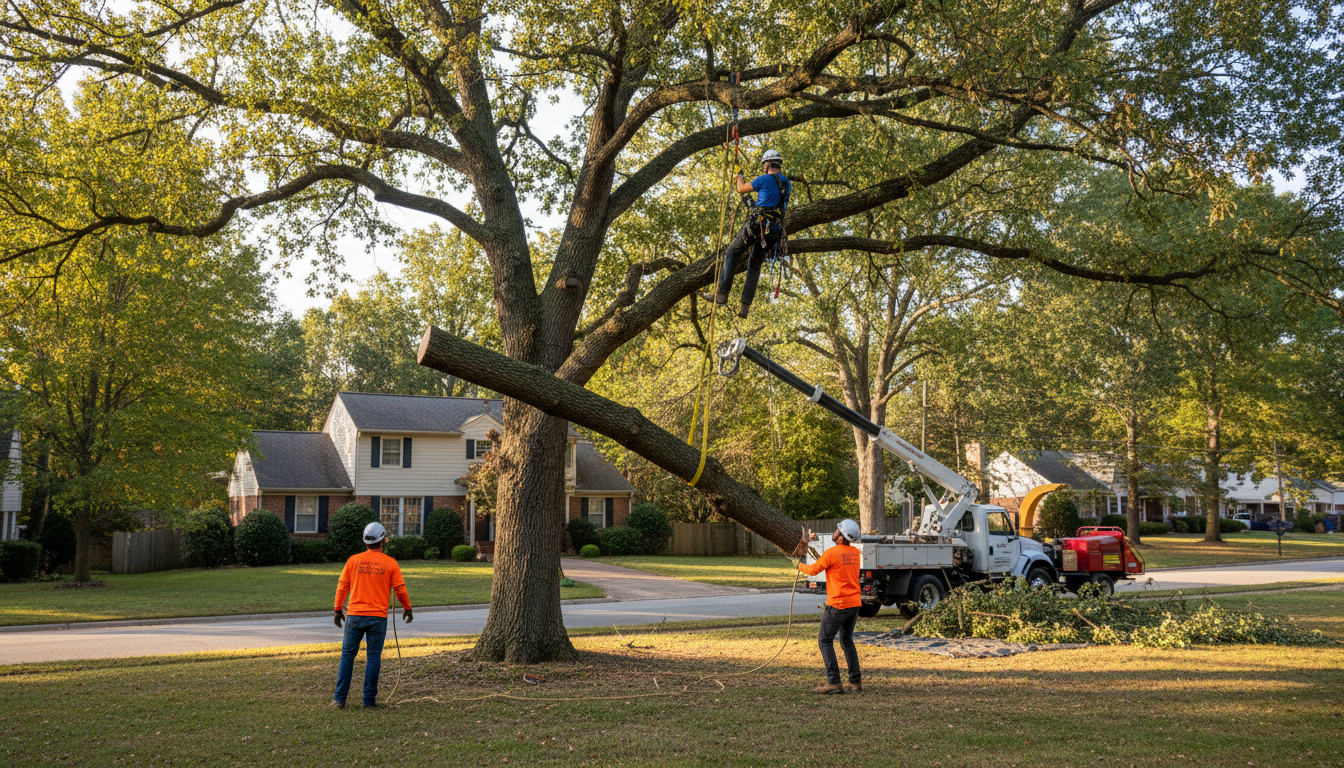
When a storm takes a limb off the maple in your front yard, or you finally accept that the dead pine leaning over the garage isn’t going to fix itself, the search for “tree removal close to me” turns up dozens of options in seconds. The hard part isn’t finding a name. It’s figuring out which crew is actually qualified, properly insured, and not going to leave you with a bigger mess than you started with. This guide walks you through the exact steps homeowners use to vet a local tree service before money or limbs hit the ground.
- Always confirm the company carries general liability and workers’ comp insurance, in writing.
- Ask for a credentialed arborist (ISA Certified) on staff, especially for big or hazardous trees.
- Get at least two written estimates and look at price per tree, not a vague lump sum.
- Be cautious of crews knocking door-to-door after storms, no-permit pricing, and prepayment-in-cash demands.
Why Searching for Tree Removal Close to Me Beats Calling a Big Out-of-Town Crew
Local matters more in tree work than people realize. A crew based in your community drives past your neighborhood every day, knows which species struggle here (we see a lot of dying Bradford pears and storm-stressed silver maples around the Memphis metro), and carries the licensing your municipality actually requires. They show up faster on emergencies, they care about the review you’ll leave because their next ten jobs come from your zip code, and they can run a follow-up visit without rebilling for the truck roll.
By contrast, out-of-town storm chasers vanish the week after a hurricane. If a stump grows back or a property gets damaged on the job, you don’t have a real number to call. Sticking with a professional tree removal company rooted in your area is the simplest insurance you can buy yourself.
The 7 Things to Verify Before You Hire
Insurance, written and current
Ask for a Certificate of Insurance covering both general liability (typically $1M minimum) and workers’ compensation. A real company emails it within minutes. If they hedge, end the conversation. An uninsured climber injured on your property can become your problem fast.
Credentials beyond a chainsaw
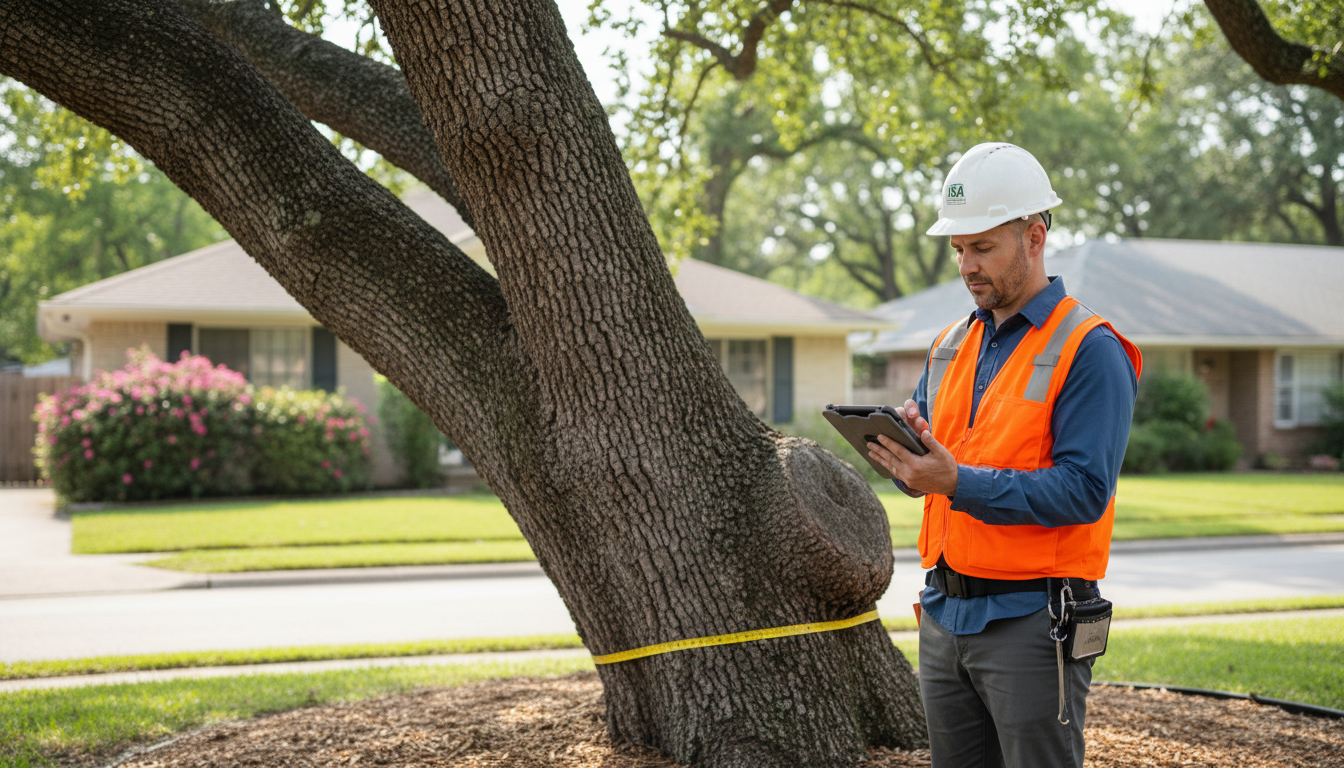
Look for an ISA Certified Arborist on the team and, ideally, TCIA accreditation for the company. These designations require continuing education and verified field hours. They aren’t just decorations; they are the difference between a real plan and a guess.
Local references and recent reviews
Read past 10 reviews on Google and the Better Business Bureau. Look for repeat themes: clean cleanup, on-time arrival, fair pricing. One angry review is statistical noise. A pattern is a warning.
A real, detailed written estimate
The estimate should specify which trees, what work (felling, sectional removal, stump grind, hauling), debris cleanup, and total price. Verbal numbers scribbled on a notepad lead to disputes when the bill arrives.
Proper equipment for your job
A 70-foot oak near power lines needs a bucket truck or a crane, not a ladder and a prayer. Ask how they plan to take it down. If the answer is vague, that’s your sign to keep shopping.
Permit awareness
Some cities (and most HOAs) require permits for trees of a certain size or species. A reputable local company knows the rules in your jurisdiction and will pull the permit or tell you if you need to.
Clear payment terms
Reasonable companies accept card, check, or financing and bill on completion. Be wary of demands for full payment in cash up front. That’s a classic storm-scammer move.
How to Compare Quotes Without Getting Burned
Once you have two or three written estimates in hand, lining them up side by side gets useful only if you compare apples to apples. Tree removal pricing varies widely based on height, access, proximity to structures, and whether stump grinding is included. Use the table below as a sanity check on the numbers you receive.
| Tree height | Typical species | Removal range | + Stump grind |
|---|---|---|---|
| Under 25 ft (small) | Bradford pear, dogwood, redbud | $250 to $500 | +$75 to $150 |
| 25 to 50 ft (medium) | Crepe myrtle, young oak | $500 to $1,000 | +$100 to $200 |
| 50 to 75 ft (large) | Mature maple, sweetgum | $1,000 to $1,800 | +$150 to $300 |
| 75+ ft (very large) | Mature oak, pine, sycamore | $1,800 to $3,500+ | +$200 to $400 |
| Hazardous / over structures | Any size near house or lines | Custom quote | Quoted with job |
Memphis-area pricing for 2026. Final cost depends on access, proximity to structures, and cleanup scope.
If one quote is dramatically lower than the rest, ask what’s missing. Is debris haul-away included? Will they grind the stump or just leave it? Are they using a bucket truck or felling the whole tree at once and hoping nothing breaks? “Cheap” often means scope was quietly removed, not that you found a deal.
Serving Memphis & North Mississippi
We work throughout the Memphis metro and across North Mississippi, including Olive Branch, Southaven, Hernando, and Horn Lake. Free estimates, fully licensed and insured, with same-day response on emergency calls.
Red Flags That Should End the Conversation
Tree removal close to me is the right Google search, but the wrong contractor will still find a way to make trouble. After two decades of cleaning up after the bad ones, here is the short list of behaviors that should send you running.
- Door-to-door solicitations after a storm. Reputable local crews are too busy answering their phones to canvass neighborhoods on foot. The ones knocking are typically out-of-state and unlicensed.
- Cash-only with full payment up front. Asking for a small deposit on a big job (a few hundred on a $3,000 removal) is normal. Demanding the entire amount before any work happens, in cash, is not.
- No business address you can find online. A truck and a Facebook page are not a business. Look for a real local presence: physical address, business listing, history of reviews going back more than a few months.
- Pressure to skip the permit. If a contractor tells you “we don’t need to bother with that,” they’re either ignorant of the law or willing to break it. Either is bad for you.
- Refusal to provide a written estimate. “We’ll figure it out when we’re done” is not a quote. It’s a blank check.
- Outdated or no insurance certificate. Verify the policy is active. A lapsed COI is worse than no COI because it implies the company used to be legitimate and isn’t anymore.
The Federal Trade Commission has published solid guidance on hiring contractors after disasters that maps directly to tree work. It’s worth a five-minute read before you call anyone.
When the Job Is an Emergency, Not a Project
Storm work runs by different rules than a planned removal. If a tree is on your house, blocking your driveway, or hung up on the power lines, the priority shifts from “best price” to “fastest competent crew.” Prepayment may be required for after-hours work; that’s reasonable when a four-person team is being mobilized at 11 p.m. The principles still hold, though: you want a licensed, insured, local outfit you can call back the next day with questions.
For active hazards, our emergency tree removal services dispatch within hours, day or night. Document the damage with photos before the cleanup starts, save every receipt, and call your homeowners insurance carrier early; some policies cover removal when a tree falls on a covered structure.
Questions to Ask on the Phone Before You Schedule the Estimate
You can save yourself a wasted appointment by asking five questions on the initial call. If the answers are wrong, you don’t even need an estimate.
- Are you ISA Certified, and is a certified arborist running my job?
- What’s your liability and workers’ comp coverage, and can you email the COI?
- How long have you operated locally, and do you have references in my neighborhood?
- Will the estimate be in writing with a fixed price, and what’s included for cleanup?
- Do you carry the city or county business license, and do you handle the permit if one is required?
A good answer to all five gets you to the next step: an in-person walk-through. A bad answer to any of them gets you back to the search results.
Need a free, no-pressure estimate?
We provide written quotes across Memphis & North MS, usually same-day.
Frequently Asked Questions
How much does tree removal cost on average?
Most residential removals in the Memphis area run between $400 and $1,800, with very large or hazardous trees climbing to $3,500 or more. Height, access, proximity to structures, and whether stump grinding is included all swing the price. A written estimate is the only number that matters; phone quotes are guesses.
How long does it take to get a tree removed once I call?
For a non-emergency, expect a free estimate within 24 to 72 hours and the work scheduled one to two weeks out, depending on the season. Spring and post-storm windows are the busiest. True emergencies (tree on the house, road blocked, lines down) we handle same-day.
Will my homeowners insurance cover the removal?
If a tree falls on a covered structure (house, garage, fence), most policies cover the removal as part of the claim, often up to $500 to $1,000 per tree. A tree that falls in your yard and hits nothing is usually not covered. Your adjuster has the final word; we’ll document everything for your claim.
Do reputable tree removal companies offer free estimates?
Yes. Free, written estimates are the industry standard for residential work. If a company wants to charge for a quote, ask why; the only common exception is a formal arborist report for legal or insurance purposes, which is a separate (paid) deliverable.
What’s the difference between an arborist and a tree service?
A tree service is a company that does tree work. An arborist is a person, often ISA Certified, trained in tree biology, risk assessment, and proper pruning standards. The strongest local crews are tree services that employ certified arborists. That combination gets you both the diagnostic skill and the equipment to act on it.
Can I do small tree removal myself?
A small ornamental under 15 feet, well clear of structures and lines, is a job a careful homeowner can handle with the right saw and PPE. Anything taller, leaning, dead, or near anything you’d hate to break is a hire-it-out job. The ER bill from a chainsaw kickback is more than any removal you’ll ever pay for.
Hire a local crew you can actually call back.
Free written estimates, ISA Certified arborists, fully insured, same-day emergency response across Memphis and North MS.