
Ficus Rubber Tree Care: The Complete Expert Guide to Healthy Growth
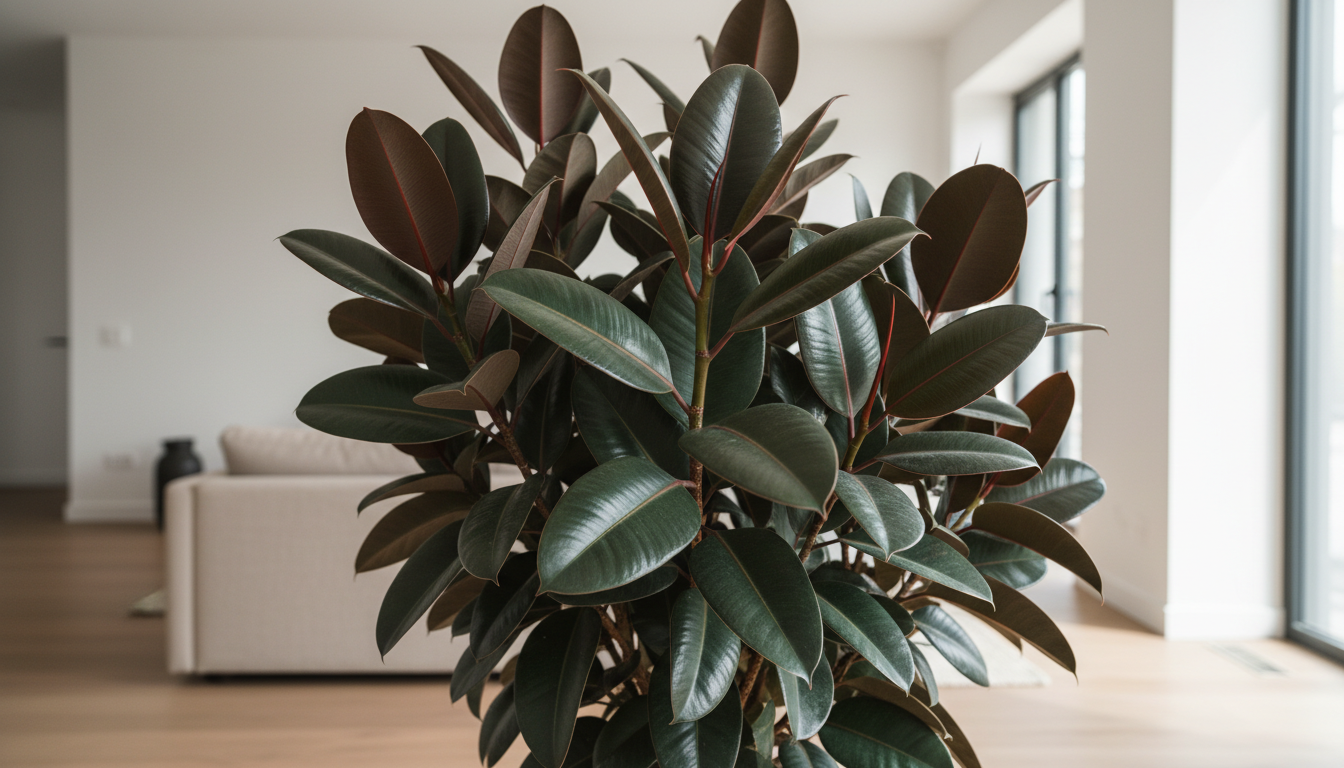
When most homeowners ask us about ficus rubber tree care, they are usually staring at a leggy plant with dropped leaves, brown crispy edges, or a stem leaning hard toward the nearest window. The rubber plant (Ficus elastica) is one of the easiest indoor trees to grow once you understand its needs, and one of the most frustrating when you do not. We see it constantly: the plant looks great for the first six months in its grower’s pot, then slowly declines for reasons the owner cannot pin down. Our crew works with everything from potted houseplants to mature outdoor specimens here in the Mid-South, and the same proven principles guide care at every size.
- Bright, indirect light is the sweet spot. Direct hot sun scorches the leaves; dim corners cause leggy growth.
- Water deeply, then let the top inch or two of soil dry before watering again. Overwatering is the number one killer.
- Use a chunky, well-draining potting mix and feed every four to six weeks during the growing season.
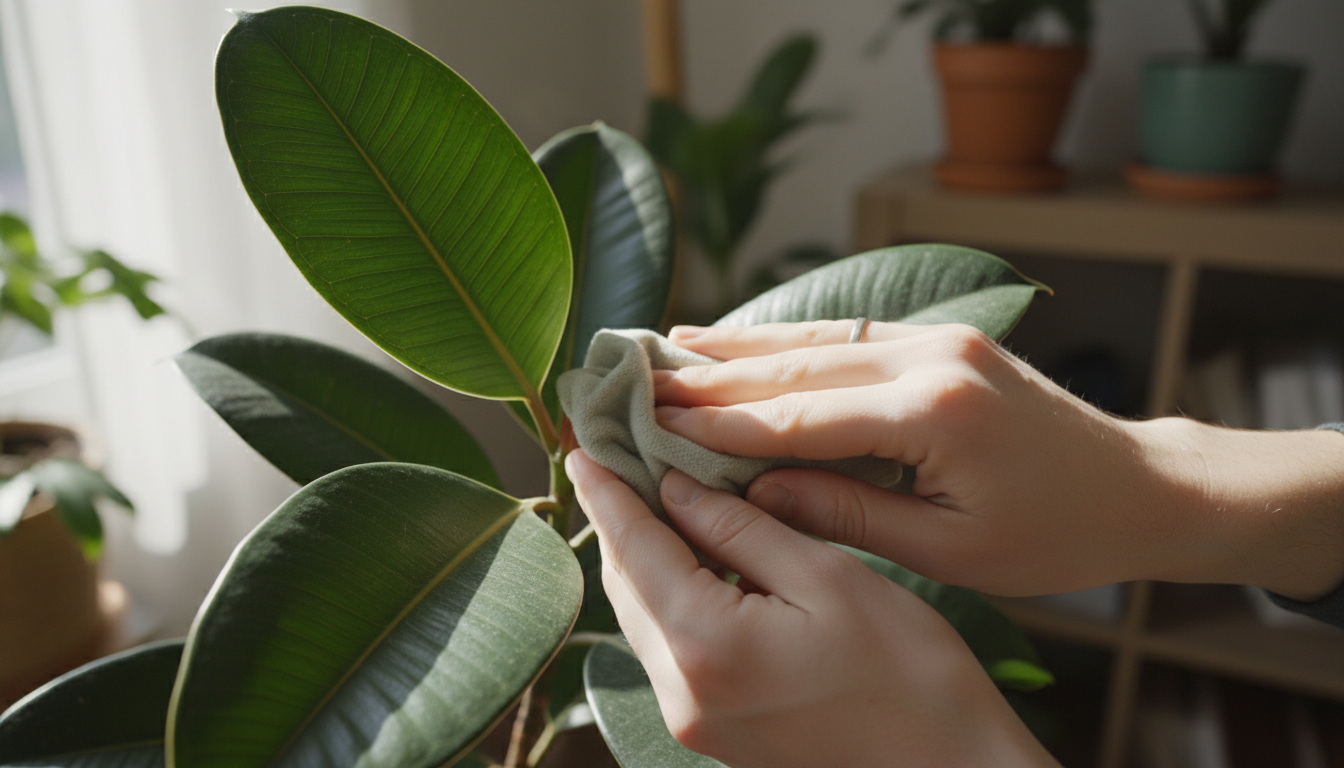
- Wipe the dust off the leaves monthly. Clean leaves photosynthesize better and look the part.
- Prune in early spring to control height and encourage branching, then shape lightly throughout the year.
Why Ficus Rubber Tree Care Starts With Knowing Your Plant
Ficus elastica is native to the warm, humid forests of South Asia, where it grows into a 100-foot canopy tree. The version sitting in your living room is a baby. Knowing where it came from explains every care rule that follows: it wants warmth, steady humidity, bright filtered light, and well-draining soil that mimics the leaf-litter floor of a tropical forest.
You will see several cultivars at the garden center, and they all behave similarly. The classic dark green Ficus elastica “Robusta” is the most forgiving. “Burgundy” (sometimes sold as “Black Prince”) has the deep wine-colored leaves people fall in love with on Instagram. “Tineke” and “Ruby” are the variegated versions, with cream, pink, or rose streaks. Variegated cultivars want a touch more light to keep their colors vivid, but otherwise they want the same things.
One important note for anyone with curious pets: rubber plants exude a milky white sap when cut or broken. The sap is a mild irritant to skin and is mildly toxic to cats and dogs if chewed. Place the plant where animals cannot snack on it, and wear gloves when you prune.
Light, Water, and Soil: The Care Foundation
Light
Bright indirect light is the goal. A spot a few feet back from a south or west-facing window, or right up against an east-facing window, hits the mark. Too little light produces tall, weak stems with widely spaced leaves; too much harsh direct sun bleaches the leaves and burns the edges. If your plant is reaching toward the window or dropping its lower leaves, the light is the first thing to fix.
Rotate the pot a quarter-turn each week so the plant grows evenly instead of leaning. In a low-light apartment, a basic full-spectrum LED grow light overhead does the job and keeps the plant compact through the winter.
Water
The roots want a wet-then-dry cycle. Stick a finger into the soil; if the top inch or two feels dry, water deeply until water runs out the drainage holes, then let the pot drain fully. In a typical home, that works out to once a week in summer and every ten to fourteen days in winter. Plants in larger pots, cooler rooms, or lower light will go longer between drinks.
Use room-temperature water and, if you can, let tap water sit out overnight so the chlorine dissipates. Yellowing lower leaves and a sour smell from the soil almost always mean the plant has been kept too wet. Brown crispy edges with dry soil mean the opposite. The plant will tell you which side of the line you are on.
Soil and Feeding
A chunky, well-draining houseplant mix is the foundation. We recommend a quality indoor potting soil cut with about a third perlite or pumice and a handful of orchid bark for structure. Heavy garden soil compacts and suffocates the roots inside a pot, which is why store-bought rubber plants so often go downhill once they get home.
From early spring through early fall, feed with a balanced liquid fertilizer (something like 10-10-10 or 20-20-20, diluted to half strength) every four to six weeks. Stop feeding by mid-October so the plant can settle into a slower winter pace. Repot every two to three years in spring, going up only one pot size at a time. Oversized pots hold too much water and invite root rot.
For an authoritative botanical overview of the species, including its native range and growth habit, the Encyclopaedia Britannica entry on the rubber plant is a good neutral reference.
Pruning and Shaping for Long-Term Health
Most rubber plants get tall and skinny because their owners are afraid to cut them. The plant actually responds beautifully to pruning. A snip just above a leaf node tells the plant to push two or three new branches from that spot, which is how you turn a single leggy stem into a full, branching specimen.
Prune in early spring, just as new growth is starting to push. Use sharp bypass pruners and cut about a quarter-inch above a node, on a slight angle. Expect the cut to weep that milky sap for a few minutes; a damp paper towel held against the cut stops the drip. Save the cuttings: a 6-inch tip in moist soil with high humidity will root in four to eight weeks and give you a second plant for free.
For tall outdoor specimens in warm climates, the same logic applies but at a much larger scale. Once a rubber tree gets above ten or twelve feet in the landscape, the same proper pruning and trimming techniques we use on any other large landscape tree apply: structural cuts, removal of crossing branches, and rope-and-rigging work near structures or power lines. That is no longer a homeowner job.
Common Problems and How to Spot Them
| Symptom | Likely Cause | Fix | Severity |
|---|---|---|---|
| Yellowing lower leaves | Overwatering or compacted soil | Let soil dry further between waterings; repot in a chunkier mix if needed | Common |
| Brown crispy leaf edges | Low humidity, underwatering, or salt buildup | Move away from heat vents, run a humidifier, flush soil quarterly | Cosmetic |
| Leggy stems with widely spaced leaves | Too little light | Move closer to a bright window or add a grow light; prune to encourage branching | Treatable |
| Sticky residue or fine webbing on leaves | Scale, mealybugs, or spider mites | Wipe leaves with insecticidal soap or neem oil weekly until clear | Treatable |
| Sudden mass leaf drop | Cold draft, sudden environment change, or root rot | Check soil moisture, move away from doors and AC vents, repot if roots smell sour | Serious |
| Outdoor tree leaning after a storm | Root failure or structural damage | Get a professional evaluation before the next weather event | Urgent |
Most of these issues are recoverable when caught early. The two that put a rubber plant on borrowed time are chronic root rot from overwatering and structural failure on a mature outdoor specimen after high winds. If a landscape-sized rubber tree is leaning hard or the soil around the trunk is lifting, do not wait for the next round of weather to deal with it.
When to Bring in a Pro for Ficus Rubber Tree Care
A potted houseplant is absolutely a homeowner job. The picture changes once you have a mature outdoor Ficus elastica or a tall indoor specimen that has outgrown the room. Once the trunk is over six inches across or the canopy is fifteen feet up, you are dealing with the same considerations as any other landscape tree: weight, drop zones, sap management, and proximity to roofs, fences, or wiring. A heavy limb coming down the wrong way damages siding, screens, and decks fast.
Our crew handles structural pruning, full removal, post-storm rehab, and stalk cleanup on tree-sized rubber plants and other ficus species. We bring the same rigging, climbing, and cleanup standards we apply to oaks and maples. If your plant has gotten ahead of you and you would like an honest assessment, that is exactly the kind of work that fits into our professional tree care services. Free in-person estimates, fully licensed and insured, no pressure to do work you do not actually need.
Got a rubber tree that has outgrown the room?
Free, no-obligation estimates across Memphis and North Mississippi.
Frequently Asked Questions
How often should I water my rubber plant?
For most homes, once a week in spring and summer and every ten to fourteen days in fall and winter is a reasonable starting point. Always test the soil first. If the top inch or two is still damp, wait. If it is dry, water deeply until water runs out the drainage holes, then let the pot drain fully. Plants in larger pots, cooler rooms, or lower light go longer between waterings.
Why are the lower leaves on my rubber plant turning yellow?
Almost always overwatering or a soil mix that holds too much water. Stop watering, let the pot dry out, and check the roots. Healthy roots are firm and tan or white. If they look brown and mushy, repot into a chunkier mix and trim off the rotted sections. A small amount of natural lower-leaf shedding as the plant grows taller is normal too.
Should I cut the top off my rubber plant to make it bushier?
Yes, and early spring is the best time. Cut just above a leaf node with sharp bypass pruners. The plant will push two or three new branches from the cut, giving you the fuller, branching look. Stick the cutting in moist soil with high humidity and you will likely get a second plant out of the deal within two months.
Can a rubber tree grow outdoors in Memphis?
Not reliably. Ficus elastica is hardy only down to about 30 degrees Fahrenheit and prefers temperatures above 55. Memphis sits in USDA zone 7b, which gets hard freezes most winters. If you want to summer the plant outdoors on a shady patio, that is fine. Just bring it back inside before nights drop into the 40s, and keep it out of harsh direct afternoon sun while it acclimates.
Is the white sap from a rubber plant dangerous?
It is a mild irritant. Wear gloves when you prune, avoid getting it on furniture or carpet, and keep the plant out of reach of cats and dogs that might chew the leaves. The sap is mildly toxic if ingested by pets but rarely causes more than drooling and stomach upset. People with latex allergies should be careful since the sap contains compounds related to natural rubber.
Do you handle large outdoor rubber tree removals or trimming?
Yes. Once a Ficus elastica or any other ficus species gets to landscape size, we handle structural pruning, full removal, post-storm cleanup, and stalk reduction the same way we do with any other tree. Same crew, same rigging, same insurance. Give us a call for a free estimate.
When in doubt, get a free estimate.
Whether your rubber plant is a four-foot houseplant or a twenty-foot outdoor specimen, smart pruning and the right environment go a long way. If yours has outgrown your ability to maintain it safely, give us a call.